MR Topic: The Dismantling of Yugoslavia (Part I)
A Study in Inhumanitarian Intervention (and a Western Liberal-Left Intellectual and Moral Collapse)
The breakup of Yugoslavia provided the fodder for what may have been the most misrepresented series of major events over the past twenty years. The journalistic and historical narratives that were imposed upon these wars have systematically distorted their nature, and were deeply prejudicial, downplaying the external factors that drove Yugoslavia’s breakup while selectively exaggerating and misrepresenting the internal factors. Perhaps no civil wars—and Yugoslavia suffered multiple civil wars across several theaters, at least two of which remain unresolved—have ever been harvested as cynically by foreign powers to establish legal precedents and new categories of international duties and norms. Nor have any other civil wars been turned into such a proving ground for the related notions of “humanitarian intervention” and the “right [or responsibility] to protect.” Yugoslavia’s conflicts were not so much mediated by foreign powers as they were inflamed and exploited by them to advance policy goals. The result was a tsunami of lies and misrepresentations in whose wake the world is still reeling.
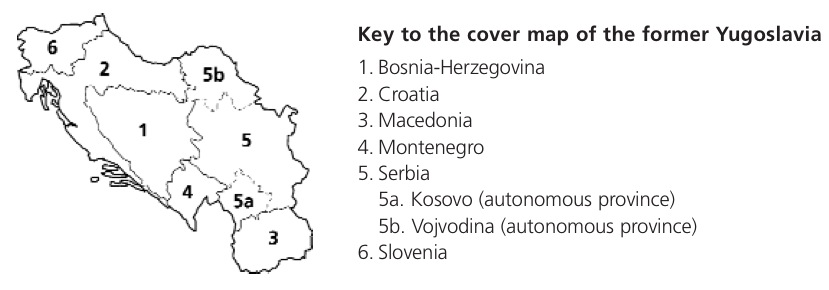
From 1991 on, Yugoslavia and its successor states were exploited for ends as crass and as classically realpolitik as: (1) preserving the NATO military alliance despite the disintegration of the Soviet bloc—NATO’s putative reason for existence; (2) overthrowing the UN Charter’s historic commitments to non-interference and respect for the sovereign equality, territorial integrity, and political independence of all states in favor of the right of those more enlightened to interfere in the affairs of “failing” states, and even to wage wars against “rogue” states; (3) humiliating the European Union (EU) (formerly the European Community [EC]) over its inability to act decisively as a threat-making and militarily punitive force in its own backyard; (4) and of course dismantling the last economic and social holdout on the European continent yet to be integrated into the “Washington consensus.” The pursuit of these goals required that certain agents within Yugoslavia be cast in the role of the victims, and others as villains—the latter not just belligerents engaged in a civil war, but evil and murderous perpetrators of mass crimes which, in turn, would legitimate military intervention. At its extreme, in the work of the International Criminal Tribunal for the Former Yugoslavia (ICTY), Yugoslavia has been cast as one gigantic crime scene, with the wars in their totality to be explained as a “Joint Criminal Enterprise,” the alleged purpose of which was the expulsion of non-Serbs from territories the Serbs wanted all to themselves—an utterly risible caricature, as we show below, but taken seriously in Western commentary, much as Iraq’s “weapons of mass destruction” were to be taken early in the next decade.
From 1991 on, Yugoslavia and its successor states were exploited for ends as crass and as classically realpolitik as: (1) preserving the NATO military alliance despite the disintegration of the Soviet bloc—NATO’s putative reason for existence; (2) overthrowing the UN Charter’s historic commitments to non-interference and respect for the sovereign equality, territorial integrity, and political independence of all states in favor of the right of those more enlightened to interfere in the affairs of “failing” states, and even to wage wars against “rogue” states; (3) humiliating the European Union (EU) (formerly the European Community [EC]) over its inability to act decisively as a threat-making and militarily punitive force in its own backyard; (4) and of course dismantling the last economic and social holdout on the European continent yet to be integrated into the “Washington consensus.” The pursuit of these goals required that certain agents within Yugoslavia be cast in the role of the victims, and others as villains—the latter not just belligerents engaged in a civil war, but evil and murderous perpetrators of mass crimes which, in turn, would legitimate military intervention. At its extreme, in the work of the International Criminal Tribunal for the Former Yugoslavia (ICTY), Yugoslavia has been cast as one gigantic crime scene, with the wars in their totality to be explained as a “Joint Criminal Enterprise,” the alleged purpose of which was the expulsion of non-Serbs from territories the Serbs wanted all to themselves—an utterly risible caricature, as we show below, but taken seriously in Western commentary, much as Iraq’s “weapons of mass destruction” were to be taken early in the next decade.
While the destruction of Yugoslavia had both internal and external causes, it is easy to overlook the external causes, despite their great importance, because Western political interests and ideology have masked them by focusing entirely on the alleged resurgence of Serb nationalism and drive for a “Greater Serbia” as the root of the collapse. In a widely read book that accompanied their BBC documentary, Laura Silber and Allan Little wrote that “under Milosevic’s stewardship” the Serbs were “the key secessionists,” as Milosevic sought the “creation of a new enlarged Serbian state, encompassing as much territory of Yugoslavia as possible,” his “politics of ethnic intolerance provok[ing] the other nations of Yugoslavia, convincing them that it was impossible to stay in the Yugoslav federation and propelling them down the road to independence.” In another widely read book, Misha Glenny wrote that “without question, it was Milosevic who had willfully allowed the genie [of violent, intolerant nationalism] out of the bottle, knowing that the consequences might be dramatic and even bloody.” Noel Malcolm found that by the late 1980s, “Two processes seemed fused into one: the gathering of power into Milosevic’s hands, and the gathering of the Serbs into a single political unit which could either dominate Yugoslavia or break it apart.” For Roy Gutman, the war in Bosnia-Herzegovina “was the third in a series of wars launched by Serbia….Serbia had harnessed the powerful military machine of the Yugoslav state to achieve the dream of its extreme nationalists: Greater Serbia.” For David Rieff, “even if [Croatia’s President Franjo] Tudjman had been an angel, Slobodan Milosevic would still have launched his war for Greater Serbia.”1
In a commentary in 2000, Tim Judah wrote that Milosevic was responsible for wars in “Slovenia, Croatia, Bosnia, Kosovo: four wars since 1991 and [that] the result of these terrible conflicts, which began with the slogan ‘All Serbs in One State,’ is the cruelest irony.” Sometime journalist, sometime spokesperson for the ICTY at The Hague, Florence Hartmann, wrote that “Long before the war began, Slobodan Milosevic in Serbia and, following his example, Franjo Tudjman in Croatia, had turned their backs on the Yugoslav ideal of an ethnically mixed federal State and set about carving out their own ethnically homogeneous States. With Milosevic’s failure, in 1991, to take control of all of Yugoslavia, the die was cast for war.” After Milosevic’s death in 2006, the New York Times’s Marlise Simons wrote about the “incendiary nationalism” of the man who “rose and then clung to power by resurrecting old nationalist grudges and inciting dreams of a Greater Serbia…the prime engineer of wars that pitted his fellow Serbs against the Slovenes, the Croats, the Bosnians, the Albanians of Kosovo and ultimately the combined forces of the entire NATO alliance.” And at the more frenzied end of the media spectrum, Mark Danner traced the Balkan war dynamic to the Serbs’ “unquenchable blood lust,” while Ed Vulliamy asserted that “Once Milosevic had back-stabbed his way to power and had switched from communism to fascism, he and Mirjana set out to establish their dream of an ethnically pure Greater Serbia cleansed of Croats and ‘mongrel races’ such as Bosnia’s Muslims and Kosovo’s Albanians.”2 [...]


Comments
Post a Comment