Fully referenced facts about Covid-19, provided by experts in the field, to help our readers make a realistic risk assessment. (Regular updates below)
“The only means to fight the plague is honesty.” (Albert Camus, 1947)
Overview
According to the latest immunological studies, the overall lethality of Covid-19 (IFR) is about 0.1% to 0.3% and thus in the range of a severe influenza (flu).
For people at high risk or high exposure (including health care workers), early or prophylactictreatment is essential to prevent progression of the disease.
In countries like the US, the UK, and also Sweden (without a lockdown), overall mortality since the beginning of the year is in the range of a strong influenza season; in countries like Germany and Switzerland, overall mortality so far is in the range of a mild influenza season.
In most places, the risk of death for the general population of school and working age is in the range of a daily car ride to work. The risk was initially overestimated because many people with only mild or no symptoms were not taken into account.
Up to 60% of all persons may already have a certain cellular background immunity to the new coronavirus due to contact with previous coronaviruses (i.e. cold viruses). The initial assumption that there was no immunity against the new coronavirus was not correct.
The median age of the deceased in most countries (including Italy) is over 80 years (e.g. 86 years in Sweden) and only about 4% of the deceased had no serious preconditions. The age and risk profile of deaths thus essentially corresponds to normal mortality.
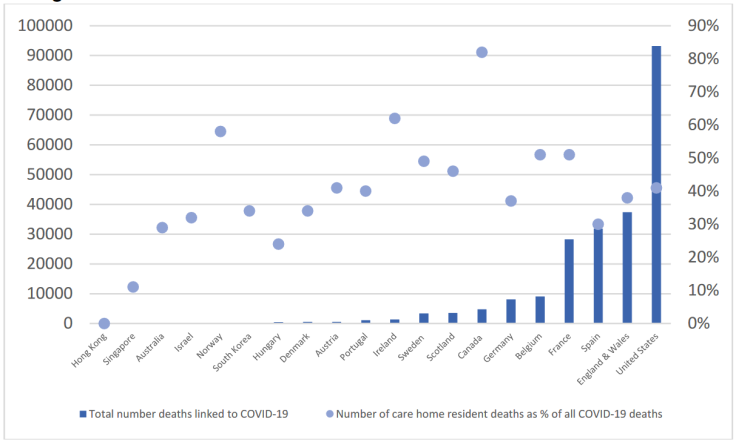
In many countries, up to two thirds of all extra deaths occurred in nursing homes, which do not benefit from a general lockdown. Moreover, in many cases it is not clear whether these people really died from Covid-19 or from weeks of extreme stress and isolation.
Up to 30% of all additional deaths may have been caused not by Covid-19, but by the effects of the lockdown, panic and fear. For example, the treatment of heart attacks and strokes decreased by up to 60% because many patients no longer dared to go to hospital.
Even in so-called “Covid-19 deaths” it is often not clear whether they died from or with coronavirus (i.e. from underlying diseases) or if they were counted as “presumed cases” and not tested at all. However, official figures usually do not reflect this distinction.
Many media reports of young and healthy people dying from Covid-19 turned out to be false: many of these young people either did not die from Covid-19, they had already been seriously ill (e.g. from undiagnosed leukaemia), or they were in fact 109 instead of 9 years old. The claimed increase in Kawasaki disease in children also turned out to be exaggerated.
Most Covid-19 symptoms can also be caused by severe influenza (including pneumonia, thrombosis and the temporary loss of the sense of smell), but with severe Covid-19 these symptoms are indeed more frequent and more pronounced.
In countries such as Italy and Spain, and to some extent the UK and the US, hospital overloads due to strong flu waves are not unusual. Moreover, this year up to 15% of health care workers were put into quarantine, even if they developed no symptoms.
The often shown exponential curves of “corona cases” are misleading, as the number of tests also increased exponentially. In most countries, the ratio of positive tests to tests overall (i.e. the positivity rate) remained constant at 5% to 20% or increased only slightly. In many countries, the peak of the spread was already reached well before the lockdown.
Countries withoutlockdowns, such as Japan, South Korea, Belarus and Sweden, have not experienced a more negative course of events than many other countries. Sweden was even praised by the WHO and now benefits from higher immunity compared to lockdown countries. 75% of Swedish deaths happened in nursing facilities that weren’t protected fast enough.
The fear of a shortage of ventilators was unjustified. According to lung specialists, the invasive ventilation (intubation) of Covid-19 patients, which is partly done out of fear of spreading the virus, is in fact often counterproductive and damaging to the lungs.
Various studies have shown that the main routes of transmission of the virus are neither long-range aerosols (i.e. tiny particles floating in the air) nor smear infections (i.e. on surfaces), but direct contact and droplets produced when talking or coughing. However, in some circumstances, indoor aerosol transmission appears to be possible.
There is still little to no scientific evidence for the effectiveness of cloth face masks in healthy and asymptomatic individuals. Experts warn that such masks may interfere with normal breathing and may become “germ carriers” if used repeatedly.
Many clinics in Europe and the US remained strongly underutilized or almost empty during lockdowns and in some cases had to send staff home. Millions of surgeries and therapies were cancelled, including many cancer screenings and organ transplants.
The virus test kits used internationally are prone to errors and can produce false positive and false negative results. Moreover, the official virus test was not clinically validated due to time pressure and may sometimes react positive to other common coronaviruses.
At no time was there a medical reason for the closure of schools, as the risk of disease and transmission in children is extremely low. There is also no medical reason for small classes, masks or ‘social distancing’ rules in schools.
A global respiratory disease pandemic can indeed extend over several seasons, but many studies of a “second wave” are based on very unrealistic assumptions, such as a constant risk of illness and death across all age groups.
The number of people suffering from unemployment, depression and domestic violence as a result of the measures has reached historic record levels. Several experts predict that the measures will claim far more lives than the virus itself. According to the UN 1.6 billion people around the world are at immediate risk of losing their livelihood.
NSA whistleblower Edward Snowden warned that the “corona crisis” may be used for the permanent expansion of global surveillance. In several parts of the world, the population is being monitored by drones and facing serious police overreach during lockdowns.
A 2019 WHO study on measures against pandemic influenza found that from a medical perspective, “contact tracing” is “not recommended in any circumstances”. Nevertheless, contact tracing apps have already become partially mandatory in several countries. In some countries, such “contact tracing” is carried out directly by the secret service.
Global Covid mortality compared to earlier pandemics
Worlwide “cases” versus deaths
Sweden: Predicted deaths vs. reality
Corona deaths: Sweden vs. New York
Corona deaths: Sweden vs. England
Sweden: All-cause mortality (Nov. to May) since 1990
US: Daily Covid deaths (WP/CDC)
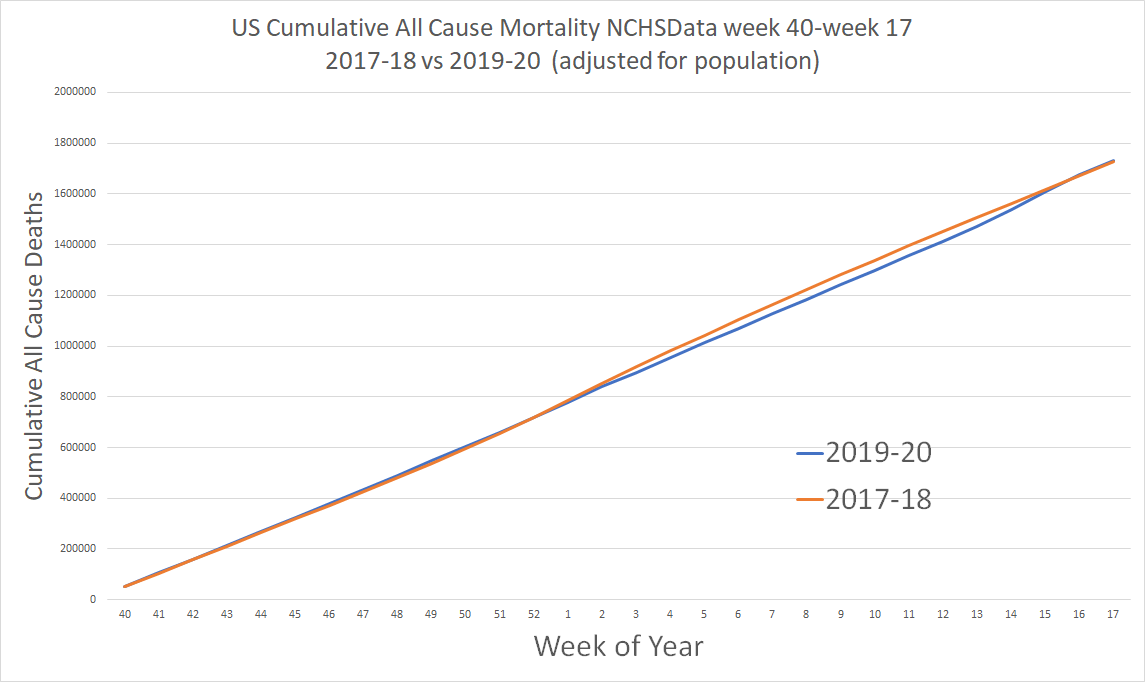
US overall mortality 2020 vs. 2018
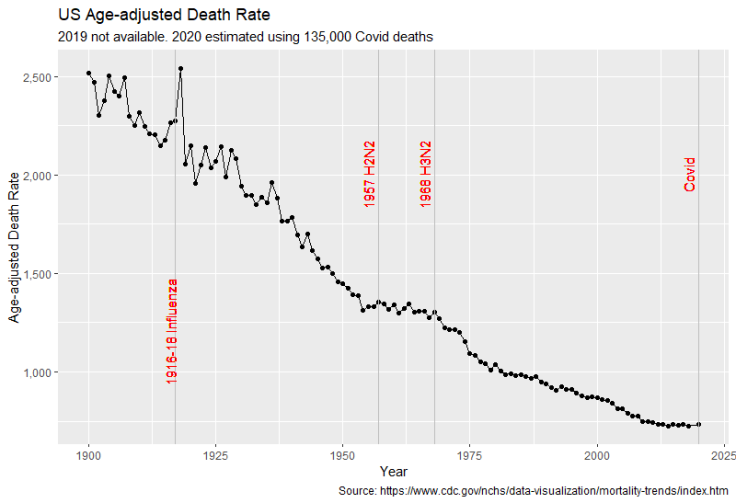
US: Age-adjusted death rate since 1900 (CDC)
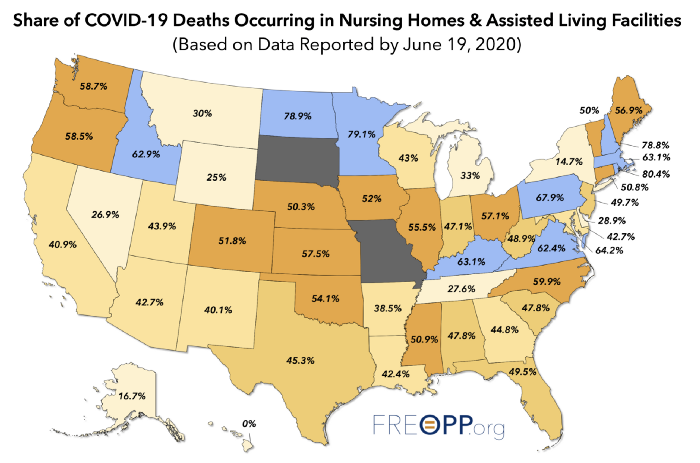
US: Percentage of care home deaths
Percentage of care home deaths
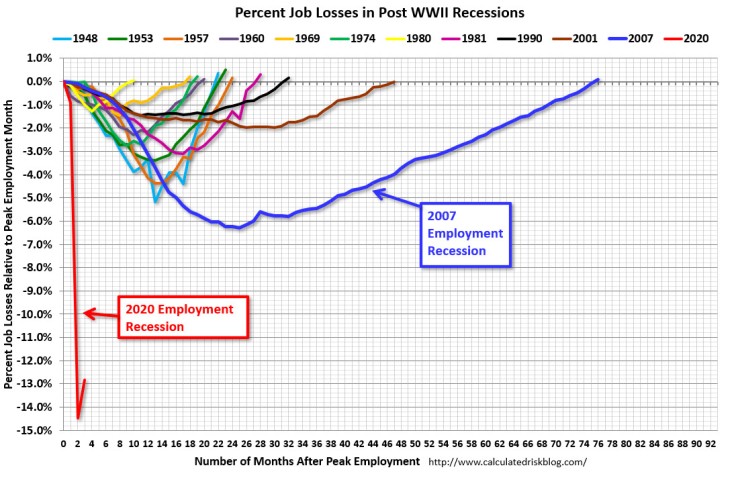
US recessions in comparison
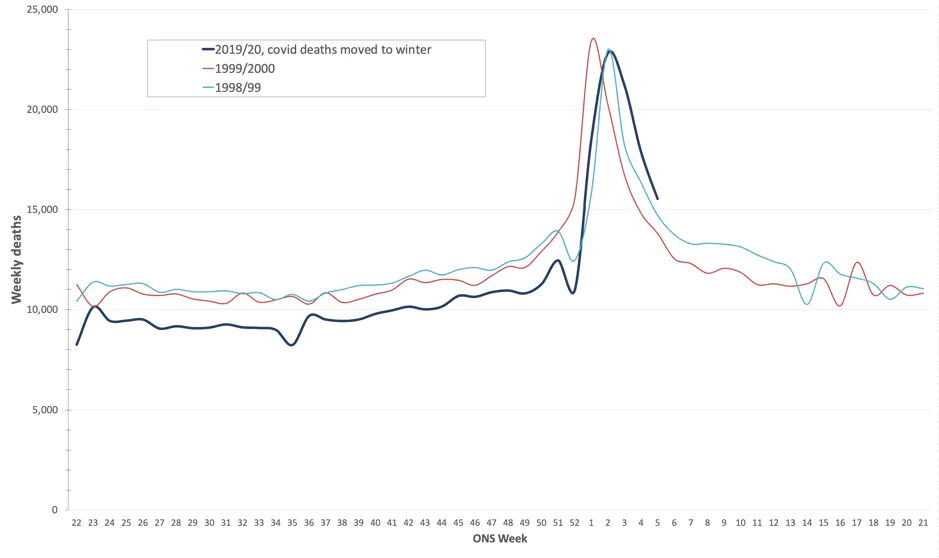
UK: Mortality 2020 vs. 2000
UK: Mortality 2020 (shifted) vs. 1999 and 2000
Switzerland: Mortality vs. expected value (2010-2020)
Germany: Mortality (2017 to 2020)
August 2020
A. General part
Pre-existing immunity against the new coronavirus
At the beginning of the Covid-19 pandemic, it was assumed that no immunity against the new coronavirus existed in the population. This was one of the main reasons behind the initial strategy of “flattening the curve” by introducing stay-at-home orders.
From March and April onwards, however, the first studies showed that a considerable part of the population already had a certain immunity to the new virus, acquired through contact with earlier coronaviruses (common cold viruses).
Further important studies on this topic were published in July:
A new study from Germany came to the conclusion that up to 81% of people who have not yet had contact with the new coronavirus already have cross-reactive T-cells and thus a certain background immunity. This confirms earlier studies on T-cell immunity.
In addition, a British study found that up to 60% of children and adolescents and about 6% of adults already have cross-reactive antibodies against the new coronavirus, which were created by contact with previous coronaviruses. This is probably another important aspect in explaining the very low rate of disease in children and adolescents.
In the case of Singapore, a study published in the scientific journal Nature concluded that people who contracted SARS-1 in 2002/2003 still had T-cells that were reactive against the new SARS-2 coronavirus 17 years later. In addition, the researchers found cross-reactive T-cells, which were produced by contact with other, partly unknown coronaviruses, in about half of the people who had neither contracted SARS-1 nor SARS-2. The researchers suspect that the different distribution of such coronaviruses and T-cells may help explain why some countries are less affected than others by the new corona virus, regardless of the political and medical measures taken.
Analysts have previously pointed out that many Pacific countries, and especially China’s neighbouring countries, have so far had very low Covid death rates, regardless of their population structure (young or old) and the measures taken (with or without lockdown, mass tests, masks, etc.). A possible explanation for this could be the spread of earlier coronaviruses.
Harvard immunologist Michael Mina explained that the “drop in antibody concentration” after Covid disease, dramatized by some media, was “perfectly normal” and “textbook”. The body ensures long-term immunity through T-cells and memory cells in the bone marrow, which can quickly produce new antibodies when needed.
Wuhan: A Harvard modelling study in the scientific journal Nature came to the conclusion that even in the Covid epicentre Wuhan, up to 87% of the infections went unnoticed, i.e. remained without symptoms or mild. This means that the Covid19 lethality (IFR) in Wuhan may also fall to about 0.1% or below. The Nature study confirms an earlier Japanese study in the journal BMC Medicine, which calculated an IFR of 0.12% for Wuhan already back in March.
However, Chinese authorities couldn’t yet know this comparatively low lethality in January and February and therefore built additional clinics at short notice, many of which eventually remainedmostly unused. Only the systematic test results from South Korea and the cruise ship Diamond Princess showed that the lethality of the new corona virus in the general population is indeed lower than initially feared. ...
B. Countries and regions
USA
The USA is one of the countries most affected by the new coronavirus so far. This could have political and medical reasons.
Medically, there are many relevant pre-existing conditions in the US population, such as obesity, heart problems and diabetes. Air conditioning systems could promote aerosol-like transmission indoors. Politically, there have been serious mistakes in dealing with nursing homes, misplaced incentives in the treatment of patients, and problematic back-and-forth with lockdowns.
The US already has over 150,000 corona deaths, putting it in the range of a pandemic influenza, comparable to the 1957 and 1968 pandemics.
45% of corona deaths occurred in nursing homes. Over 50% of all deaths occurred in the six states that actively placed Covid patients in nursing homes.
For people of school and work age (up to 65), corona mortality is comparable to mortality from other pneumonia diseases (e.g. influenza), according to the CDC. For children and adolescents, Covid is three times less dangerous than influenza.
A nationwide antibody study showed that the new coronavirus is 6 to 24 times more widespread than assumed on the basis of PCR tests, depending on the region. However, the antibody levels are still in the single-digit percentage range in most regions, indicating that exposure to the coronavirus is less much less than 50% in many places.
While the number of daily positive tests reached a peak in mid-July due to the high number of tests, the number of daily deaths was only half as high as in April, although recently with a slight upward trend again (see graph below).
In Florida there were reports of at times allegedly very high positivity rates. However, an analysis showed that various laboratories only reported the number of positive tests and thus an apparent positivity rate of 100%. The actual positivity rate in Florida was mostly in the single-digit percentage range. In terms of deaths per capita, Florida remains in the lower midfield compared to the other states.
The median age of Covid deaths in the USA is 78.5 years. This is higher than the median age of “other deaths”, but lower than the median age of Covid deaths in Europe (80 to 86).
Yale professor and epidemiologist Harvey A. Risch recently called for immediate over-the-counter availability of HCQ for the early treatment of Covid disease.
A group of doctors calling itself “America’s Frontline Doctors” held a press conference with the same goal. The video of the press conference was seen by 20 million people within a day before it was deleted by Facebook & Co. as “disinformation”.
Mensch59 here. There is much more. Check out the link at the top if you wish to delve into this further.
~~~~~~~~~~~~~~~~~~~~~~~~~~
The Digger’s Purpose and Standards
This site does not have a particular political position. We welcome articles from various points of view, and civil debate when differences arise.
Contributions of articles from posters are always welcome. Unless a contribution is really beyond the pale, we do not edit what goes up as topics for discussion. If you would like to contribute an article, let one of the moderators know. Likewise if you would like to become an official contributor so you can put up articles yourself, but for that we need to exchange email addresses and we need a Google email address from you.
Contributions can be anything, including fiction, poems, cartoons, or songs. They can be your own writing or someone else’s writing which has yet to be published.
We understand that tempers flare during heated conversations, and we're willing to overlook the occasional name-calling in that situation, although we do not encourage it. We also understand that some people enjoy pushing buttons and that cussing them out may be an understandable response, although we do not encourage that either. What we will not tolerate is a pattern of harassment and/or lies about other posters.
The Deforestation Process Deforestation is too often reduced to what’s most conspicuous. But deforestation is complex and a lot more than raising beef cattle or growing soybeans. To begin with, despite all the biodiversity especially of plant life, rain forest soil isn’t very fertile. Nope, it’s actually very oxalic. Oxalic soils are acidic. Acidic soils are full of iron, bauxite and other minerals. So not only are trees in the forest chopped down for their precious hardwood, the soils these trees grow in are mined for minerals including aluminum, zinc, copper, manganese, gold and iron. Do you know where the aluminum in your water bottle came from? What’s one of most electricity intensive things to do? Convert bauxite into aluminum. It’s an electrostatic process to remove oxygen from the alumina (Al2O3). This electricity is also one of the largest costs of producing aluminum. So that’s why hydroelectricity is often used to reduce the costs of refining bauxite to alumina to ...
The Deep State vs The Deep Country I need to begin with the obvious: in spite of all the deep state, propaganda and “deep empire” (transnational) resources being used to declare that “Biden” (i.e. Harris) has won, as of right now nobody knows who got most votes and where. I would even suggest that we will never really find out who won, because who won depends on a large number of local laws and regulations and because it will probably never be possible to separate the fake votes from the legal ones. Finally, neither side will ever gracefully admit to having lost the contest. So now the country will enter a profound crisis. That is the bad news. But there is also very good news. First, it has now become clear to the entire planet that the US “democracy” is anything but: the USA is an oligarchic plutocracy , plagued with a myriad of antiquated laws and corrupt to the bone. The special “trick” of this US oligarchic plutocracy is that is masquerades as an ochlocracy: there is *...
First Published : Jean-Paul Sartre, «Élections, piège à cons», Les temps modernes , n° 318, janvier 1973; Source : Good Morning, Revolution HTML Markup : for marxists.org by Zdravko Saveski , 2021. In 1789 the vote was given to landowners. What this meant was that the vote had been given not to men but to their real estate, to bourgeois property, which could only vote for itself. Although the system was profoundly unfair, since it excluded the greater part of the French population, it was not absurd. The voters, of course, voted individually and in secret. This was in order to separate them from one another and allow only incidental connections between their votes. But all the voters were property owners and thus already isolated by their land, which closed around them and with its physical impenetrability kept out everything, including people. The ballots were discrete quantities that reflected only the separation of the voters. It was hoped that w...






Comments
Post a Comment